
How to improve your seo in 2026
"SEO in 2026 is less about “gaming Google” and more about becoming the page that deserves to be shown first."
Table of Contents
▼▼▼▼▼
➥ What Is It?
➥ Causes of 503 Error
➥ How To Fix 503 Error
➥ How Long It Lats
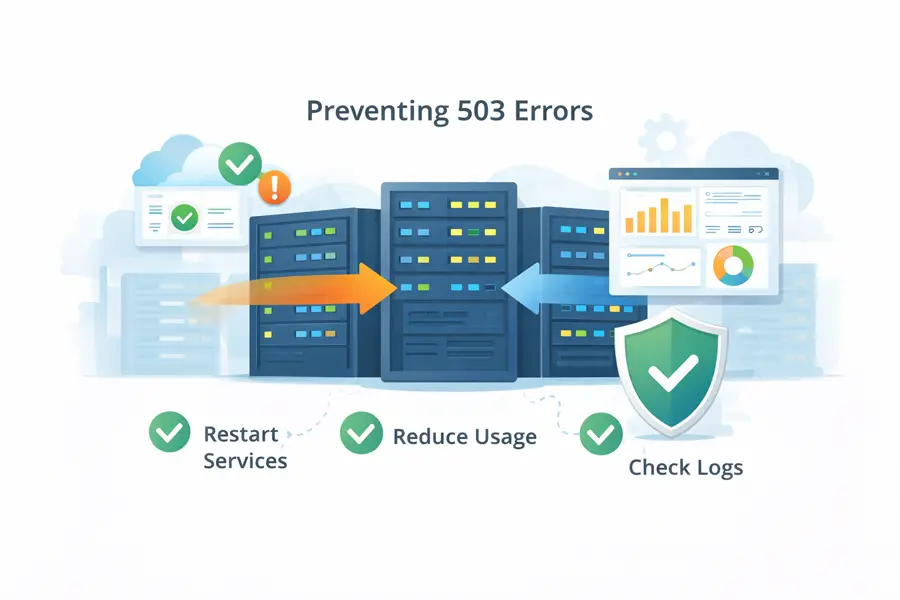
➥ 503 Error Prevention
➥ Good Hosting Matters
Search engines are better at detecting fluff, users are quicker to bounce, and AI-driven summaries mean you’re competing not only for rankings, but for being the source that gets referenced and trusted. If you want to improve your SEO now, the goal is simple: make your site easy to crawl, make your pages the best answer, and make your brand feel credible enough that people (and other sites) want to cite you.
This guide is written as a practical walkthrough. You’ll get a clear plan, a few fast wins you can apply today, and a 30-day roadmap you can repeat every month to keep compounding results.
Quick wins to start: tighten titles for higher CTR, improve internal linking to your best pages, refresh content that already has impressions.
Technical fixes to make: fix indexability, clean up broken links, reduce speed/UX friction on mobile.
Long-term growth strategy: build topic clusters, publish “reference-worthy” content, and earn links naturally.
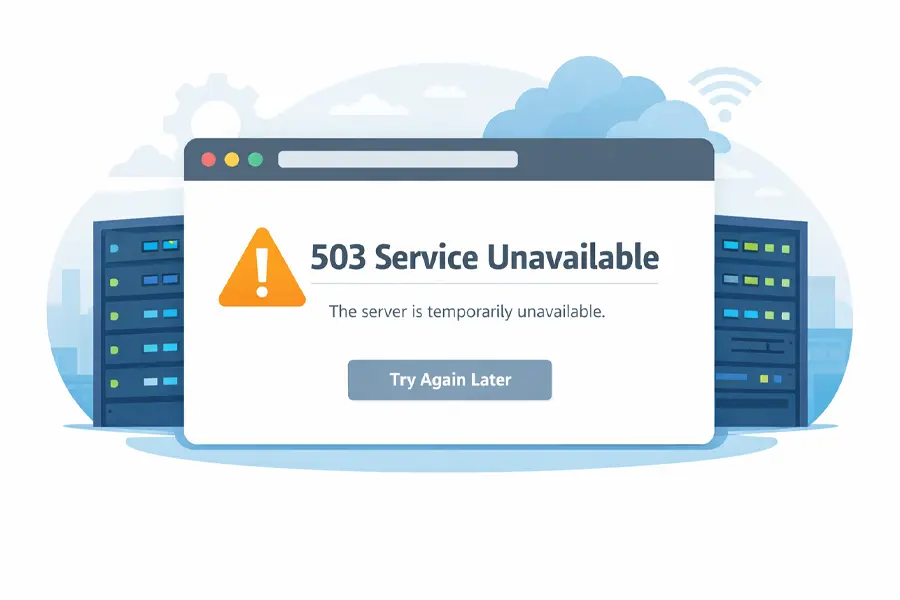
What Is a 503 Error?
At a glance
If you only have one hour this week, focus on what’s already close to winning. In most cases, that means improving pages that already show up in Search Console and are hovering just outside the top results.
- Best quick win: improve CTR on pages that already get impressions
- Best long-term win: topic clusters + internal linking
- Most common mistake: publishing random posts that don’t match search intent
- Tools you’ll use: Google Search Console, analytics, and a speed test tool
Step 1: Start with a baseline (15 minutes)
Before you change anything, you need a quick snapshot of where you are right now. Otherwise, it’s too easy to “do SEO” for weeks and not know what actually helped.
Open Google Search Console and look at the last 28 days. Find pages that get impressions but have a low click-through rate, and pages that sit in positions 8–20. Those are your easiest wins because Google is already testing you for those queries. You’re not starting from zero — you just need to make your result more clickable and your content more satisfying.
Then open your analytics and look at your top organic landing pages. If a page gets traffic but people leave quickly, it’s usually not a ranking problem — it’s a content experience problem. That tells you exactly where to focus.
Do this now:
-
Pick 5 pages that already get impressions in Search Console
-
Note their top queries, CTR, and average position
-
Mark any pages with good impressions but low CTR (title/meta wins)
-
Mark any pages stuck around positions 8–20 (content/internal link wins)
Common mistake: people start by writing new content, but the fastest improvements usually come from upgrading what’s already getting visibility.
Step 2: Fix technical SEO issues (30–60 minutes)
Technical SEO isn’t about doing something fancy. It’s about removing the invisible problems that stop your best content from competing. If Google can’t crawl your pages properly, or if your site is slow and frustrating on mobile, you’re fighting with one hand tied behind your back.
Start with indexability. A surprising number of pages don’t rank simply because they’re blocked, set to noindex, or canonicalized incorrectly. After that, clean up basic site hygiene: broken links, messy redirects, duplicate pages, and inconsistent URL structures.
Then focus on speed and usability. Your site doesn’t need to be perfect, but it does need to feel fast and stable. If a page takes too long to load or jumps around as it loads, users leave — and over time, that damages performance.
Quick fixes vs deep fixes
Quick fixes (today):
- Check for accidental noindex tags on important pages
- Make sure your important pages aren’t blocked in robots.txt
- Fix obvious broken internal links
- Remove redirect chains where possible
Deep fixes (this month):
- Improve site speed and stability (especially on mobile)
- Reduce heavy scripts/plugins that slow pages down
- Fix duplicate content and canonical issues
- Audit crawl paths so important pages aren’t buried
Mini example: if your homepage canonical accidentally points to a shop category page (or vice versa), Google can treat the “wrong” page as the main one. That’s the kind of tiny technical issue that creates massive ranking weirdness.
Step 3: Upgrade on-page SEO by matching intent.
The keyword “how to improve your seo” has simple intent: people want a plan they can follow. That means your page needs to behave like a guide, not a glossary.
In 2026, a page wins when it makes the reader feel understood fast. The first few seconds matter. Your intro should confirm what the reader wants, explain what they’ll achieve, and show the structure of the solution.
From there, headings should act like signposts. Each section should answer a real question and move the reader forward. If you’re repeating yourself, you’re losing them.
Do this now:
- Rewrite the intro to be clear, helpful, and specific
- Add headings that reflect the steps a real person would take
- Add a short “at a glance” summary near the top
- Improve readability: short paragraphs, clear transitions, visual breaks
Common mistake: writing “SEO tips” that sound correct but don’t actually help someone do anything.
Step 4: Improve internal linking (30 minutes)
Internal linking is one of the easiest ranking levers because it’s completely in your control. It helps search engines understand which pages matter most, and it helps users naturally find the next step in their journey.
The key is to link like a helpful human, not like a robot. Link where the reader would genuinely benefit from going deeper. Use anchor text that makes sense. Don’t hide your best pages.
If you have pages that matter to your business — service pages, category pages, key guides — those pages should receive internal links from related posts. If they don’t, they’re weaker than they need to be.
Do this now:
- Add 5–10 internal links to each priority page from relevant articles
- Add links from your priority pages out to supporting pages
- Make sure no important page is an “orphan” with no internal links pointing to it
Mini example (good anchor): “technical SEO checklist”
Mini example (bad anchor): “click here”
Step 5: Refresh content that’s already ranking (60–120 minutes)
If your site is older than a few months, chances are your best SEO wins are sitting in your existing content. Pages that already have impressions are already in the game — they just need to become the better answer.
A good refresh isn’t “change the date to 2026.” It’s adding what’s missing, removing fluff, improving clarity, and making the page more useful than competitors. Often, that means adding practical sections like examples, templates, checklists, and better internal links.
When you refresh content, you’re also sending a strong signal that your site is maintained and current. That matters more in competitive topics where outdated advice is everywhere.
Do this now:
- Choose 3 pages with impressions and improve them aggressively
- Add missing sections that match what users actually need
- Improve titles/meta to increase CTR
- Add internal links to and from relevant pages
Common mistake: rewriting everything. Most pages don’t need a full rewrite — they need smarter structure and missing value.
Stop 503 Errors Before They Start
If you’re tired of unexplained downtime, recurring server errors, or hosting environments that fail under pressure, it’s time to upgrade.
Orange Website offers reliable, privacy-focused hosting built for websites that need to stay online — not apologize for being unavailable.
👉 Join Orange Website today and host your site on infrastructure designed for stability, performance, and peace of mind.
Step 6: Build authority and earn links (ongoing)
If you want consistent growth, you need authority. Authority isn’t just backlinks — it’s being the kind of site people trust enough to reference.
In 2026, the easiest way to earn links is to create “reference-worthy” content. These are pages people cite because it saves them time or makes their own content better. Think templates, clear comparisons, original visuals, tools, and definitive guides that are updated.
Outreach can work too, but it works best when you’re genuinely helping another site improve their page. If your content is the best resource for a specific subtopic, you’re offering value, not begging.
Do this now:
Create one “linkable asset” page (template, definitive guide, comparison)
Add original visuals that other writers would want to cite
Update it regularly so it stays relevant
Step 7: Track the right SEO metrics (15 minutes weekly)
SEO improves when you measure the right things consistently. Rankings are useful, but they’re not the full story. You want to track impressions, clicks, CTR, and average position in Search Console for your priority pages and queries.
You also want to watch engagement: whether visitors stay, scroll, and click deeper into your site. If a page ranks but doesn’t satisfy, it’s unstable. If a page satisfies and keeps people moving, it usually grows.
A simple weekly habit is enough: check your priority pages, note what moved, and keep upgrading the pages with the most potential.
30-Day SEO action plan
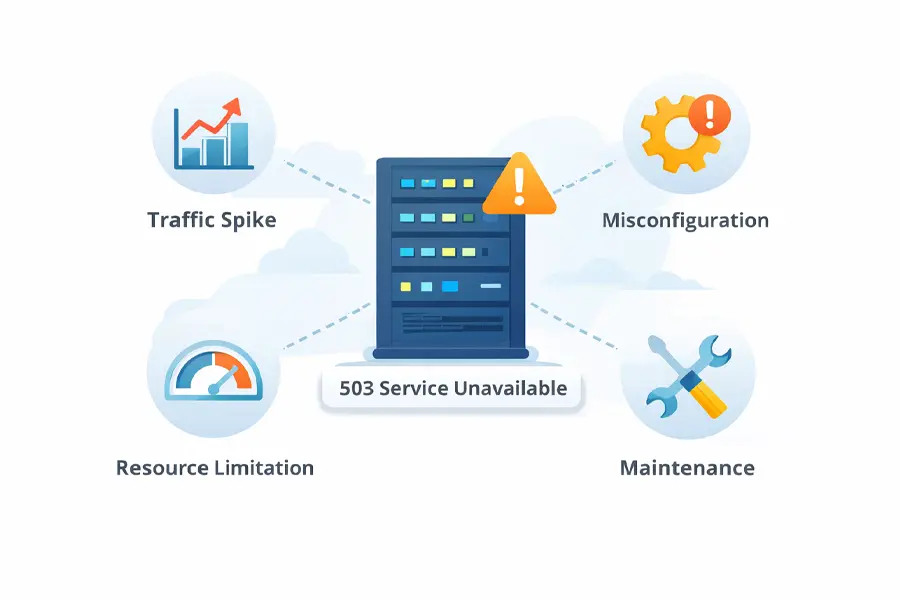
Misconfigured Server Software
Incorrect configurations in:
- Apache or Nginx
- PHP-FPM
- Load balancers
- Firewall rules
can prevent the server from properly responding to requests, triggering a 503 error.
Exhausted Server Resources
If your hosting account hits limits on:
- CPU usage
- RAM
- Concurrent processes
the server may stop accepting new connections altogether.
External Service Failures
Many websites rely on third-party services such as:
- APIs
- Payment gateways
- CDN providers
If one of these services fails and your website depends on it, the server may return a 503 error instead of loading broken content.
Week 1: Baseline + quick wins
Pick 5 pages with impressions, improve titles/meta for CTR, fix obvious on-page clarity issues, and add internal links.
Week 2: Technical SEO + site hygiene
Check indexability, fix broken links, clean up redirects, ensure sitemap is clean, and address the most obvious speed pain points.
Week 3: Refresh key content
Upgrade the content on your priority pages. Add missing sections, examples, better structure, and visuals.
Week 4: Expand with supporting content
Publish 2–4 supporting articles that strengthen your topic cluster and link them properly. Track performance and repeat.
Frequently asked questions
Frequently asked questions
How long does SEO take in 2026?
Most sites see early movement within weeks if they focus on pages that already have impressions. Bigger shifts usually take a few months because search engines need time to reassess your site and users need time to engage with the improved content.
Should I update old content or write new content?
If you already have pages with impressions, update those first. Refreshing existing content often wins faster than publishing from scratch because the page already has history and visibility.
Are backlinks still important?
Yes, but they’re not the only lever. Internal linking, content quality, and user satisfaction matter more than ever. Links help most when they point to genuinely strong pages.
Does AI content hurt SEO?
AI content isn’t automatically bad, but generic content is. If your page feels interchangeable, it’s weak. Add real experience, clear structure, and unique value so it’s not just a rewrite of what already exists.
Final thoughts
If you want to improve your SEO in 2026, the winning strategy is consistent upgrades, not one-time “optimizations.” Start with pages that already have visibility, fix technical friction, match intent with better structure, strengthen internal links, and publish content that’s actually worth referencing. Do that for 30 days and you’ll stop relying on luck — SEO becomes a system.