
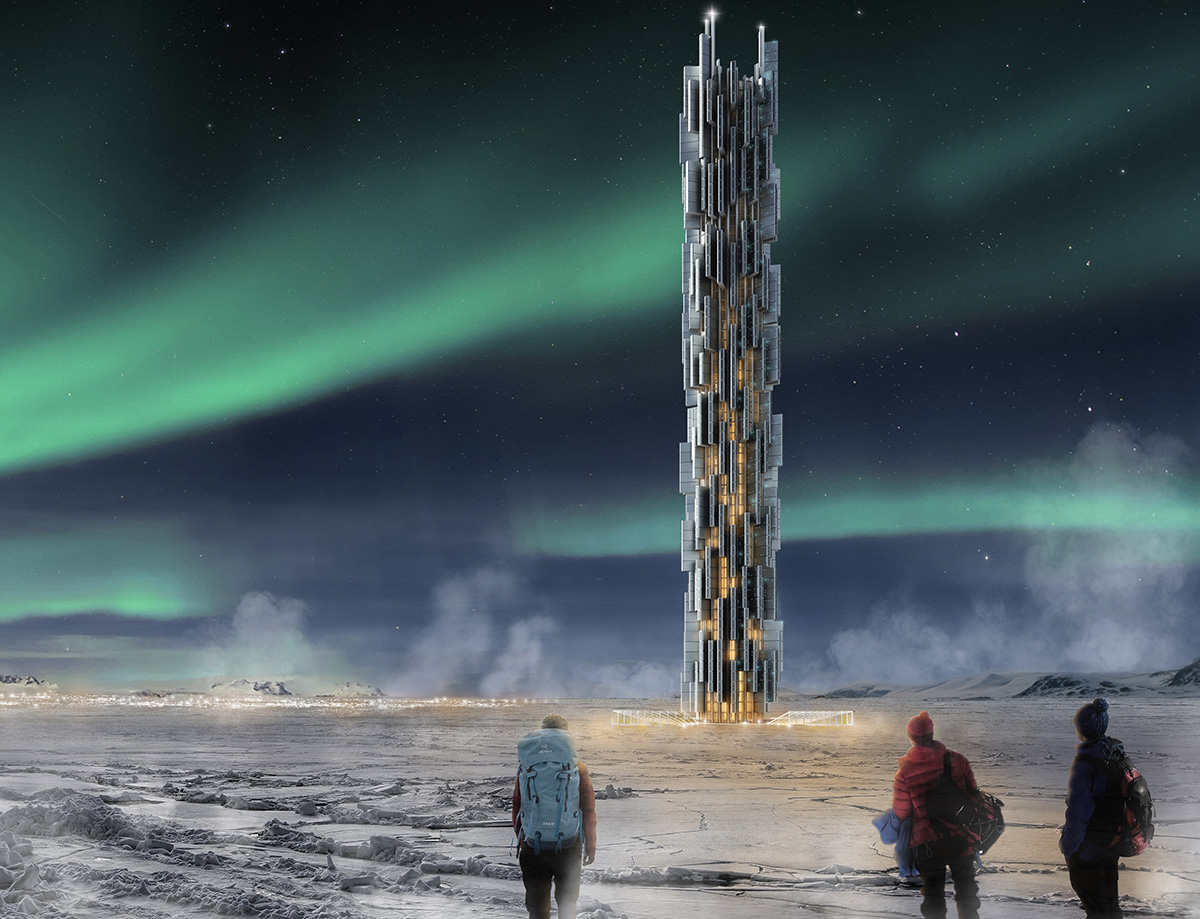
Data Centre Risk Index Names Iceland World’s Safest Location

Data Centre Risk Index Names Iceland World’s Safest Location

The 2016 Data Centre Risk Index, published by Cushman & Wakefield (C&W), has moved Iceland to the number one position among 37 countries as the safest location for remote data storage, while the United States dropped from the number 1 to the number 10 position. The reasons Iceland rose to the top of the list (as described below under "Methodology"), but what it means for key business decision makers around the globe is unmistakable: Iceland is the best country in the world to secure their data. What it means for the clients of companies like OrangeWebsite, located in Reykjavík, Iceland, is added reassurance that their data is safe and protected.

Why Is Remote Data Storage Important?

For companies large and small, unplanned downtime is a cost of doing business. That doesn’t mean, of course, that businesses should (or do) passively acquiesce to the eventuality of downtime. In fact, American businesses spend millions implementing strategies to avoid downtime, from moving operations to the cloud or data centres to training employees to ignore suspicious emails and documents.

What Is the Cost to Business of Downtime?

There’s a good reason businesses spend so much time and money preventing downtime episodes. Downtime means a loss or revenues during the period their systems are down, in addition to lost productivity and damage to their reputations. According to the Data Center Journal, revenue losses due to downtime episodes are increasing exponentially. The average cost per minute of downtime is $7,900, an increase of 41% over a one-year period. The average downtime episode lasts 86 minutes. Doing the math, that’s a cost—on average—of almost $700,000 for every incident of downtime.

What Systems Are Most Affected by Downtime?

Downtime can affect every aspect of business operations, but the two at the top of the list are business applications and technology services. Business applications are those operations which employees access through the company’s internal server to do their jobs. Technology services include email operations, as well as internet and intranet access. Loss of either business or technology applications impacts productivity—and costs money.

The loss of business applications can affect the productivity of every employee, from financial services to marketing to information systems. For example, downtime can bring down CRM operations, making customer communications disorganized at best, or lost entirely at worst. It can also mean the loss of ERP capabilities, eliminating the flow of business information and preventing data-driven decision making.

The loss of technology services, like email and internet access, means employees have reduced access to non-mobile phone and fax machines service. It also compromises use of a company’s intranet, which employees rely on to access and share documents.

The Pervasiveness of Remote Data Storage

Understanding the risks associated with in-house data storage, an increasing number of businesses are looking at remote data storage options, such as remote data centers and cloud computing. For example, a study by RightScale reports that 93 percent of businesses now use cloud services. In another study, Emergent Research predicted that twice as many small businesses will move all business operations to the cloud within 6 years.

Other companies, particularly those which run a wider variety of business applications and have more complex workloads, are opting to store data at remote data centres. Those data centres offer more customized solutions and greater control over their data and equipment, better meeting the needs of large, complex businesses.

The complication for business decision makers is that remote data centers are, themselves, at some risk for downtime episodes. In order to help business owners decide which data centers are at least risk, Cushman & Wakefield each year publishes its annual Data Centre Risk Index. In its 2016 report, Cushman & Wakefield describe the importance of their analysis:

“The index ranks key established and emerging locations by the most appropriate risks affecting data centre operations in today’s current climate. It has been designed primarily to support data centre due diligence and senior decision making when considering global investment and deployment activities."

Data Risk Index 2016: Methodology

Cushman & Wakefield’s analysis surveys more than 4,000 clients worldwide to rate the relative security of 37 countries along 10 key factors related to data centre risk. These include factors like ease of doing business, natural disaster, energy security and corporation tax, among others. Each factor is weighted based on its relative importance to potential risk, with natural disaster (15.38%) and political stability (12.82%) at the top of the list, and GDP per capital (5.77%) and corporation tax (6.41%) at the bottom.

The methodology employed shifts each year to reflect changing conditions. This year’s report reflects the growing concern among businesses related to political stability, natural disaster and energy security, which have surpassed concerns related to cost and connectivity. As they explain in their introduction:

“Natural disaster and a location’s coping capability ranked as the most important risk factors while political stability ranked second this year, collectively accounting for one third of overall decision making and implying a level of emotional sentiment throughout the survey following a number of major incidents over the past few years.”

Data Risk Index 2016: Key Findings

Among this year's most significant takeaways are the following:

Iceland was rated the world’s safest data centre location, followed by Norway and Switzerland The United States dropped from the number one to the number 10 position, scoring particularly low in “corporation tax (36th out of 37)” and “international bandwidth (15th of 37).” European countries offer on average the lowest risk environment, taking the top 5 index positions because of low risk for natural disaster and strong energy security ratings Singapore, South Korea and Hong Kong rated highly based on proximity to market, ease of doing business and IT infrastructure, and despite poor ratings for risk of natural disaster The 10 safest countries in the report are:

  • Iceland
  • Norway
  • Switzerland
  • Finland
  • Sweden
  • Canada
  • Singapore
  • Republic of Korea
  • United Kingdom
  • United States

The top 5 riskiest markets for data centers, according to C&W, are:

  • Nigeria
  • India
  • China
  • Turkey
  • Indonesia

Conclusion Businesses which are considering moving their data to a data centre, or moving from one data centre to another, should carefully weigh the conclusions of the most recent Data Centre Risk Index, and especially the particular factors which informed those conclusions.

Founded in 2006 and located in Reykjavík, OrangeWebsite is one of Iceland’s leading web hosting companies, a 100% green company offering top-quality and secure web hosting solutions for clients around the globe. Their servers are in Iceland, and all their data is stored and protected in Iceland. To learn more about the ways we can keep your company’s data safe and secure, contact us today.
The Icelandic Modern Media Initiative: A Good Crisis and Evolved Democracy

The Icelandic Modern Media Initiative: A Good Crisis and Evolved Democracy

Democracy is evolving, and Iceland is leading the change. As vigorous proponents of radical transparency, freedom of expression and speech, publishing process protections, and rights to privacy, Iceland is developing the first political consensus that comes from the collective intelligence of the people. Through the foundations provided by the Icelandic Modern Media Initiative, the country is developing into a safe haven for those working toward international freedom of information. The people of Iceland are developing a culture of collaboration and consensus decision making, and enjoying the benefits of an evolved democracy: transparency and a free press, whistleblower protections, and freedom of speech, expression, privacy, and information. 

When economic and social crises threaten the stability of a free society, several options are available to the people. For some, the easy way out of the crisis is to let the government handle the problem. And the easiest way for governments to manage problems is to exert more control. When control is seen as a paternalistic type of affection and concern, a tightening fist can be rationalized or ignored by a population that has abdicated the responsibilities and the work of democracy. When government control is couched in terms of threats to the national security, either from political, military, or financial crises, civil rights, especially rights to a free press and freedom of speech and privacy, are often the first to go.

Iceland didn’t take the easy way out of the 2008 financial crisis. Instead, they empowered the collective voice, experience, and intelligence of the people to lay a new path forward. By crowdsourcing their ideas and legislation, their vision of the future represents the beliefs and values of the nation.

Several important aspects of the legislation and the continuing work of advocating for it are critically important. Unequal access to justice means that for many citizens of a democracy, they cannot access the resources needed to defend themselves. In this climate of inequity, the judicial systems becomes one with the power to punish, a big stick to silence those outside the majority. The threat of action against those without resources can be significant enough to silence free speech.

Source protection and limiting prior restraint are also powerful judicial and legislative protections that are critical to a free press. Coercion by anyone with power and something to hide–a government agency, a financial organization, a publisher or newspaper, a telecommunications agency– means that threats of various kinds can be applied to disrupt the process of a free press. Protecting journalists, bloggers, and media such as newspaper publishers from the threat of these types of action means Iceland has a media that is as close as humans can come to the radical transparency and free press the collective citizenship desires. OrangeWebsite provides several business structures that allow journalists and bloggers this free press protection, including anonymous accounts and a range of payment options, including bitcoin and World Coin.

Whistleblower protections are also a critical part of the Modern Media Initiative. In an evolved democracy, aggressive nationalism and militarism are never used to justify silencing the population. Threats to the nation and national security concerns are not blunt weapons to shut down the press or free speech. And those who bring abuses of power into the open are not tried and jailed for espionage.

Enlightened democracies are seen as places of light and opportunity, freedom, and hope to the people of the world who live under the threat of oppression. That light, and the hope that comes from knowing there are better places in the world, places where people are treated with respect and dignity, where they have the right to voice an opinion, give those who are living in darkness and oppression something to hope for, a place to dream about. For people working in those countries trying to bring about change, the work of enlightened democracies–the legislative and judicial framework–provides a blueprint for changing their own political systems.

When those democracies that have always held the light of hope for the world descend into chaos, and the threat of fascism rises again, with censorship and racism, aggressive militarism and nationalistic rhetoric overtaking the collective voice of a people, those who believe in the basic tenets of democracy are silenced. First the whistleblowers are silenced as threats to national security. Then the press is censored to protect the population. As government control over the national narrative and the human voice of the people tightens like a fist around the throat, freedom of speech and the freedom to dissent is cut off. And the light of hope for the world is extinguished. Enlightened democracies have the power to give that light and hope to the world. They do not exist in isolation, solely for the benefit of their own people. Iceland is working on the evolution of their enlightened democracy, when much of the rest of the world is seeking to consolidate power and control the voice of their people.

The International Modern Media Institute is an advocacy group who are attempting to protect and expand the protections and the radical transparency called for in the original initiative. Closely tied to a political party, the group nevertheless functions as an international watchdog for issues related to freedom of expression, privacy, and a free press. They are advocating an agenda where Iceland serves as a safe haven with the legal and judicial framework to protect freedom of expression to the greatest extent it exists anywhere in the world. OrangeWebsite provides a number of services that directly embody the privacy and freedom in the new legislation, such as access to virtual private and dedicated servers in a country protected by these laws. Services such as these, with Icelandic state protections, are unique in the world. Using the collective power and will of a people to bring about state-sponsored human rights protections is a revolutionary idea–and it is a revolution that is changing the world. 

For more information on the Icelandic Modern Media Initiative, please contact us.

WorldCoin, the Faster Cryptocurrency

WorldCoin, the Faster Cryptocurrency

Bitcoin was the first cryptocurrency. It's still the best known and most widely used, but it's far from the only one. The first attempt at anything will have problems, and Bitcoin's biggest problem is that it takes a long time to confirm transactions. WorldCoin is an alternative that confirms transactions in minutes. OrangeWebsite accepts payment in both Bitcoin and WorldCoin. Either way, you get complete anonymity, and all you have to give us is an email address.

Cryptocurrency and blockchains

Cryptocurrencies depend on blockchain technology. It's a “distributed ledger” which depends on two factors to guarantee its integrity. First, transactions are digitally signed. A wallet has an encryption key for authorizing transactions, so no one except its owner can spend its money. Second, many copies of the ledger are available on the Internet, under the control of different people. Changing one copy against the rules — for instance, to delete a transaction — will put it out of sync with all the other copies, and a comparison process will reject it.

This comparison takes time, though. Until a transaction is confirmed, a wallet could have insufficient funds. The confirmation time is inconvenient when people are in a hurry, especially for live transactions. Sometimes it takes hours, and no one would want to wait that long in a store. We recognize that when you're setting up a new website with us, you'd like to finish the process in one sitting, rather than having to come back when the payment finally goes through.

Comparison with Bitcoin

WorldCoin is similar to Bitcoin in many ways, but its blockchain design gives a confirmation time of about a minute. As with Bitcoin, new WorldCoins can be produced by computational “mining.” Unlike Bitcoin, there is a hard limit of 265 million on the number that can ever be mined. About 113 million are currently in existence. This limit is intended to make sure WorldCoin appreciates over time. Currently, though, its price is lower than it has been historically. (That could change by the time you read this article. Always check current prices before investing!)

The market price of 1 WorldCoin is a fraction of a cent, compared with over $1,000 for 1 Bitcoin. That doesn't actually matter, as long as you know the exchange rate. It just means that the same amount of money is a much bigger number of WorldCoins. It doesn't tell you whether the value will go up or down in the future. People like to speculate in cryptocurrencies, but that's a high-stakes game which is beyond the scope of this article. Both currencies work as practical payment systems.

Bitcoin is unquestionably easier to work with in many ways. It's been around a while and has a fairly mature ecosystem. With WorldCoin, you're venturing into less explored territory. If you're comfortable with Bitcoin or other cryptocurrencies, or if you just enjoy trying out new things, you should be able to find your way.

Getting started

The first step is to create a WorldCoin wallet. The website offers wallet installation instructions. The procedure isn't as simple and polished as with Bitcoin, where many software alternatives are available. Allow enough time to figure it out.

The next step is easier than with Bitcoin. You can use the faucet to get a small amount of WorldCoin. It won't be enough to buy you anything, but it will help you get a feel for the wallet's operation.

To get meaningful quantities of WorldCoin, you either have to get paid in it or exchange for it. The easiest way is to use a WorldCoin exchange. Be sure to pick one with a good reputation, not just the first one you encounter. Anyone can set up an exchange, and some can be unreliable, give you a poor exchange rate, or defraud you. CoinGecko lists four exchanges that handle WorldCoin.

If you're buying with a credit card or from your bank account, then you're giving the exchange information about your identity. In some countries, the mere act of purchasing cryptocurrency might flag you as a suspect. However, it is the most convenient way to get WorldCoin.

Be sure to use a different password for the exchange than for your wallet. Don't put temptation in the path of an exchange, even if it's an honest one. Don't leave your coins sitting in the exchange any longer than you have to. They're safer in your wallet than on any online site.

The future of WorldCoin?

WorldCoin has a small user base compared with Bitcoin, so it's more prone to fluctuations. Those who like taking risks may enjoy the ups and downs. People who just want to use it as a method of fast payment can put in just enough money to cover their immediate plans.

The UNOCS (United Open Currency Solutions) group, formed in 2013, included WorldCoin, Feathercoin, and Phenixcoin. The goal was to join forces for software development. However, Feathercoin soon pulled out, and PhenixCoin (not to be confused with the still-active PhoenixCoin) collapsed. People lost WorldCoins in Phenix's associated exchange, PhenixEx, which is doubtless why WorldCoin warns people so strongly against leaving their coins in exchanges. WorldCoin proved more durable than either of the other currencies, and it's still going strong.

We think WorldCoin has a promising future, and that's why we're accepting payments in it. You can set up a service plan with us, pay in WorldCoin, and get confirmation in about a minute. We also accept Bitcoin if you're less adventurous. We believe in offering you a choice.

To learn all about how you can set up an anonymous, uncensored website with OrangeWebsite, please contact us.